LALIGA Barcelona: Team, History, Stars, and What to Watch This Season
For over a decade, FC Barcelona was synonymous with one man: Lionel Messi. But what happens to a kingdom when its king leaves? This is the story of how the club is battling to reclaim its throne, a journey that plays out every year in Spain’s top football division, LALIGA.
The main stage for this battle is not a knockout tournament like the World Cup, but a 38-game marathon season. Think of it as a long-term league where Barcelona faces each of the 19 other teams twice—once at home and once away. The goal is relentless consistency, as every single match matters in the final standings.
Ultimately, winning the league comes down to a simple points system: three for a win, one for a draw, and zero for a loss. The team with the most points after all 38 games is crowned the champion of Spain. It’s a title watched across the globe; in fact, industry data shows LALIGA is broadcast in over 180 countries, making the championship a true international spectacle.
Why Is Barcelona Called ‘More Than a Club’?
You’ve likely seen the giant slogan spelled out in the stadium seats or printed on a player’s collar: “Més que un club.” This Catalan phrase, meaning “More than a club,” is the single most important key to understanding FC Barcelona. While most sports teams exist simply to win games, Barcelona has always served a dual purpose: as a world-class football team and as a global symbol of Catalan culture and identity.
This deep connection was forged through history. During periods when Spain was under authoritarian rule, the club’s stadium, Camp Nou, became one of the few safe havens where the local Catalan language and culture could be expressed without fear. The team became a form of peaceful resistance and a source of immense regional pride, a role it continues to embrace. For millions, supporting Barcelona is an act of cultural expression, not just athletic allegiance.
In a practical sense, the club’s structure is also completely different from most of its rivals. FC Barcelona isn’t owned by a billionaire or a corporation; it’s owned by its fans. Over 140,000 club members, known as socis, pay an annual fee for the right to vote for the club president and weigh in on major decisions. This democratic model gives supporters a tangible stake in the club’s destiny, ensuring that its identity as a cultural institution is just as important as the results on the pitch.
The Barcelona Way: How a Youth Farm and a Unique Style Creates Superstars
This unique identity extends directly to how the team is built. While many clubs simply buy the world’s biggest stars, Barcelona has a long history of growing them. The heart of this philosophy is La Masia, the club’s legendary youth academy. Think of it less as a training camp and more as a football university, where talented children as young as seven are recruited and immersed in Barcelona’s specific culture and tactical system.
The benefits of this “homegrown” approach are immense. La Masia has produced some of the greatest players in history, including Lionel Messi, Xavi Hernández, and Andrés Iniesta. By developing talent internally, the club not only saves hundreds of millions in transfer fees but also fosters an almost telepathic chemistry on the field, as teammates have been playing together since they were children.
From their first day at the academy, these players are taught to play the “Barcelona way.” This has become globally known as tiki-taka, a mesmerizing style based on short, rapid passes and constant movement. The goal isn’t just to score, but to dominate the game by starving the opponent of the ball, turning possession into an art form. It’s like a high-speed game of keep-away, designed to patiently unlock a defense.
Together, the commitment to homegrown talent and the tiki-taka philosophy create a footballing DNA that is instantly recognizable. It’s a system that prioritizes technical skill and intelligence over pure physical strength. This distinct identity is never more apparent than when it clashes with the very different approach of their historic rivals.

What Makes El Clásico the Biggest Rivalry in World Football?
Every great story needs a great rival, and for Barcelona, that role is filled by their nemesis from the capital, Real Madrid. Any match between these two giants is known as El Clásico (“The Classic”), a title reserved for what is arguably the most famous and fiercely contested fixture in club football. This isn’t just a battle for points in the LALIGA table; it’s a clash between two of the wealthiest and most successful clubs on the planet.
But the intensity of the rivalry goes far beyond the pitch. For much of history, the clubs became symbols of a cultural and political divide. Barcelona represented the proud, distinct identity of the Catalonia region, while Real Madrid was seen as the club of the Spanish establishment. This historical tension turned every game into a statement, adding a layer of drama that most sports rivalries simply can’t match.
As a result, El Clásico has become a global phenomenon, regularly watched by hundreds of millions of people in nearly every country on Earth. The world stops to watch these two clubs collide, creating legendary moments and turning players into household names overnight. The pressure is immense, and it’s in these high-stakes games where new heroes for Barcelona are often born.
Who Are the Key Players to Watch for FC Barcelona This Season?
While new heroes are often born in the pressure cooker of El Clásico, Barcelona’s current identity is built on a compelling blend of world-class experience and fearless young talent. This dynamic makes the team unpredictable and exciting, as you never know if the next big moment will come from a seasoned champion or a teenage sensation.
Leading the attack is the veteran striker Robert Lewandowski. As one of the most reliable goal-scorers in world football, his job is to provide the finishing touch. He brings a sense of calm and clinical precision, offering the kind of firepower that can turn a difficult match in Barcelona’s favor with a single, decisive shot.
The team’s thrilling future is embodied by Lamine Yamal, a dazzling teenage winger who burst onto the scene from the club’s famed La Masia academy. He is the spark of unpredictability, using his incredible speed and dribbling skills to take on defenders and create magic out of nothing. Watching him play offers a breathtaking glimpse into the club’s next generation.
Orchestrating the play between them is the creative midfielder Pedri. Often described as the “brain” of the team, he controls the tempo of the game with his intelligent passing, linking the entire squad together. This potent mix—Lewandowski’s experience, Yamal’s explosive youth, and Pedri’s control—is the blueprint for Barcelona’s new era.
A Fan’s Guide to Barça’s Home: The Stadium Experience
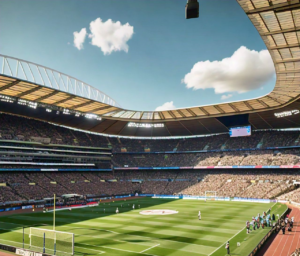
For decades, the legendary Camp Nou was the fortress of FC Barcelona, a cathedral of football known around the world. However, if you check the schedule for FC Barcelona upcoming league fixtures, you’ll notice a temporary change. The colossal stadium is currently undergoing a massive renovation to become one of the world’s most modern venues. For now, the team plays its home games at the historic Estadi Olímpic Lluís Companys, the main stadium from the 1992 Barcelona Olympics.
Regardless of the venue, the fan experience remains electric. The energy builds long before kickoff, culminating in a powerful moment when the entire stadium sings the club’s anthem, “Cant del Barça.” This tradition, where tens of thousands of voices join as one, is a spine-tingling display of passion that turns any match into an unforgettable event. The chants and cheers that follow are the constant soundtrack to the action on the field.
While you can’t watch a match at the old ground, a key tip for any Camp Nou stadium experience guide is that the club’s hugely popular museum remains open on the site. You can still explore the team’s rich history and see its vast trophy collection up close. But if a trip to Barcelona isn’t on your calendar, the next best thing is catching the action live from home.
How to Watch Barcelona Games From Home
So, how do you watch Barcelona games online? The channel or service you need depends entirely on where you live. Just like a big movie premiere airs on a different TV network in every country, LALIGA broadcast rights are sold region by region. This means the provider in the United States is different from the one in the United Kingdom or India, so a quick search is your best first step.
Finding your official local provider is simple. For example, fans in the US can tune in on ESPN+. To find yours:
- Open a search engine.
- Type “LALIGA broadcast partner [Your Country Name]”.
- Check the broadcaster’s official schedule for match times.
Once you’re watching, pay attention to one thing: possession. Notice how Barcelona’s players prioritize keeping the ball with short, quick passes, even when under pressure. This commitment to controlling the game is the club’s signature style in action. But does this famous philosophy still lead to trophies?
Is Barcelona Still a Superpower? Why This Season is a Must-Watch
That famous blue and garnet shirt no longer just represents a team; it represents a comeback story you can now follow. Where you once might have seen only a globally recognized brand, you can now see the context behind the headlines—the financial struggles, the departure of a legend, and the courageous bet on a new generation.
The next time you decide to watch FC Barcelona, your first step is simple: focus on the Barcelona young players. Notice how they are not just filling spots, but are the very heart of the club’s new identity, carrying the hope of millions.
Watching LALIGA Barcelona this season isn’t just about the final score. It’s about witnessing history in the making—a legendary institution, powered by its youth, fighting to reclaim its soul. You’re not just watching football; you’re watching a story unfold.