
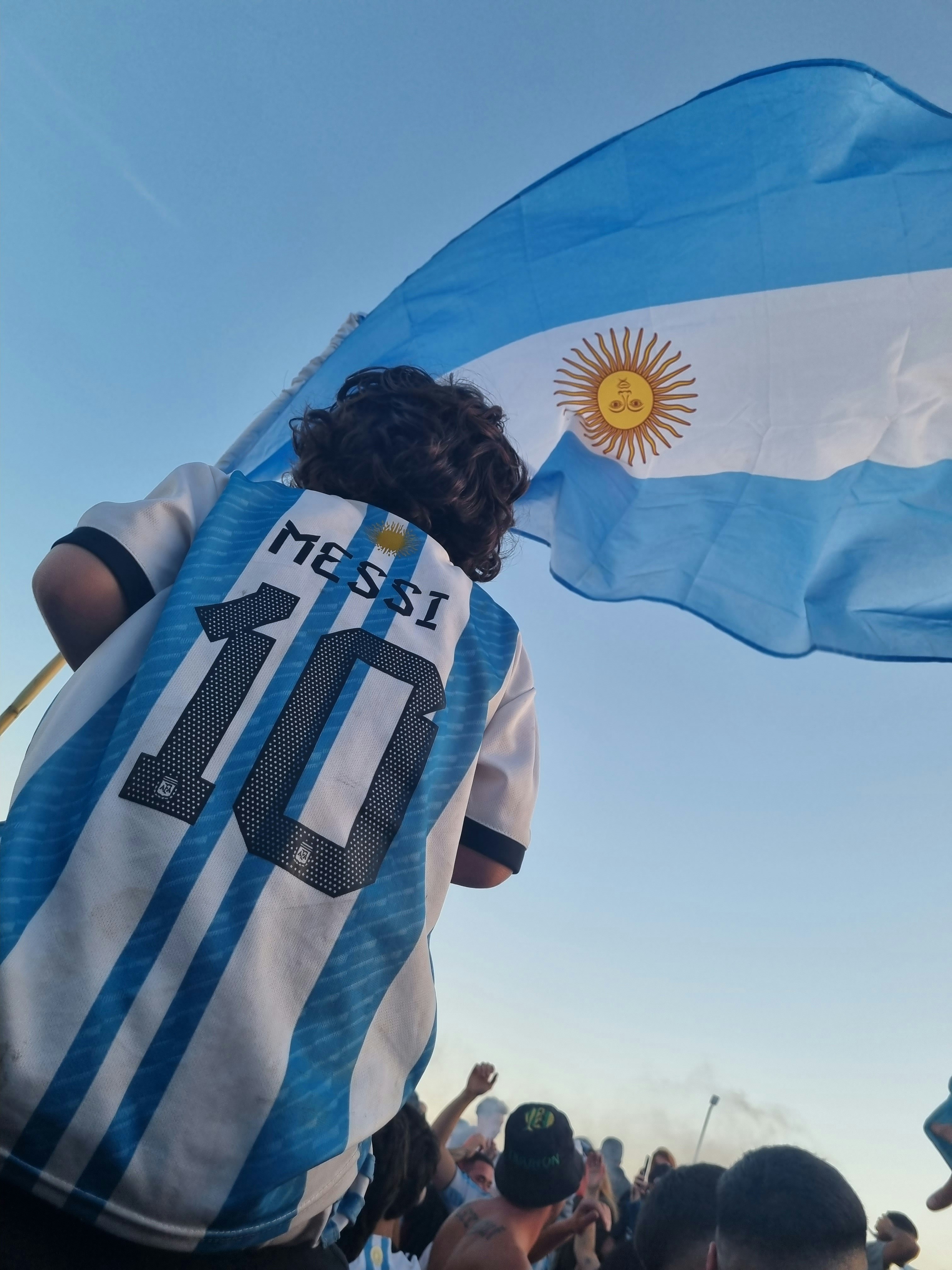
Introduction to Thiago Messi
Thiago Messi, born on November 2, 2012, is the eldest son of Argentine football icon Lionel Messi and his long-time partner, Antonela Roccuzzo. His birth marked a significant moment in the lives of both his parents, as they had known each other since childhood, growing up in the same neighborhood in Rosario, Argentina. The couple’s bond and eventual family life have always been under the public eye, largely due to Messi’s status as one of the most celebrated athletes in history.
From a young age, Thiago has been regularly featured in the media, often seen accompanying his father to various events and matches, demonstrating the close relationship they share. As Lionel Messi’s first child, Thiago holds a special place both in the family and in the hearts of fans who admire Messi not only for his football prowess but also for his role as a father. The young boy’s exposure to the world of elite sports and celebrity is amplified by his father’s illustrious career, which includes numerous awards such as the FIFA Ballon d’Or and being a central figure for FC Barcelona during his tenure.
Despite his young age, Thiago is often recognized for his charming personality, often seen smiling in the arms of his father during celebrations or family gatherings. The supportive environment created by Messi and Roccuzzo is reflected in Thiago’s vibrant demeanor. Thiago has a younger brother, Mateo, and the family dynamic exudes warmth and affection. As Thiago grows, the interests he develops and the values instilled by his legendary father will likely come under the public gaze, providing an intriguing glimpse into the life of the next generation of the Messi legacy.
Lionel Messi’s Height and Athletic Influence
Lionel Messi, one of the most celebrated footballers in history, stands at approximately 1.70 meters (5 feet 7 inches). His relatively modest height has often been a topic of discussion, particularly in a sport that sometimes favors taller athletes. Messi’s stature is complemented by an exceptional blend of agility, balance, and quickness, attributes that his height may have enhanced, allowing him to maneuver easily between defenders on the pitch.
The genetics of height is a complex interplay of various factors, including the heights of both parents, nutrition, and overall health during childhood. Children often inherit genetic traits from their parents, which can contribute significantly to their eventual height. In the case of Thiago, Messi’s son, the combination of Lionel Messi’s height and Antonela Roccuzzo’s height will play a critical role in determining his growth trajectory.
It is well documented that averages and predictions can be made based on parental heights, but environmental factors such as diet and physical activity can also impact growth. A diet rich in essential nutrients, coupled with a lifestyle that promotes physical activity, can encourage healthy growth patterns in children. Experiencing an environment conducive to sports, as evident in the Messi household, undoubtedly has the potential to inspire Thiago to explore athletic pursuits.
While Messi’s height may raise questions regarding Thiago’s potential adult height, it is essential to consider the holistic view of growth—where genetics, environment, and lifestyle converge. Overall, Messi’s influence as a highly skilled athlete, along with the genetic contributions from both parents, will undoubtedly play a significant role in Thiago’s development, not just in terms of height but also in fostering an appreciation for sports.
Current Height of Thiago Messi
As of 2023, Thiago Messi, the eldest son of the renowned Argentine footballer Lionel Messi, is experiencing significant growth as he continues to mature into adolescence. Publicly available information suggests that Thiago is currently around 1.45 meters (approximately 4 feet 9 inches) tall. This estimation takes into account his age and the typical growth patterns observed in children of his age group.
Thiago was born on November 2, 2012, making him 10 years old as of 2023. At this age, children are typically full of energy, and it is common for them to grow at varying rates. While accurate retellings of his height may not always be available, it can be reasonably assumed that he is likely to gain several centimeters in height over the next few years.
Photos and videos shared by the Messi family on social media platforms also provide visual insight into Thiago’s current height relative to his parents and friends at school. These glimpses into his daily life reveal the typical growth trajectory for children his age, characterized by rapid changes in physical appearance.
It is important to note that children grow at their own pace, and many factors can influence height, including genetics, nutrition, and overall health. As such, while estimates can be made regarding Thiago Messi’s height, it is still essential to recognize that he is in a stage of life where growth spurts can occur suddenly.
Height can be a notable topic of interest, especially when discussing the children of famous personalities. In the case of Thiago Messi, the son of the renowned footballer Lionel Messi, comparisons to his peers are particularly compelling. Thiago, born in 2012, falls within the age group where height can greatly vary among children due to numerous factors, including genetics, nutrition, and overall health.
At eight years of age, the average height for boys in his age group ranges from approximately 4 feet to 4 feet 3 inches (121-130 cm), based on growth charts from the World Health Organization (WHO). Thiago’s exact height, while not widely published, is often a point of conjecture among fans and sports enthusiasts due to his father’s legendary stature in football. Reports suggest he is near the taller end of the average scale, which may indicate a potential for growth as he approaches his pre-teen years.
When considering the average height benchmarks for children of varying ages, it is important to note that growth is not uniform. For instance, boys typically experience growth spurts at different stages of their development. If Thiago is around the average or slightly above, he aligns well with statistics sourced from pediatric growth charts, which may forecast changes in height as he ages. Moreover, it is essential to recognize that growth is merely a phase in childhood that encompasses health, lifestyle, and genetics.
To place Thiago’s height into further perspective, we can also consider his father, Lionel Messi, whose stature is relatively modest in the world of professional football at 5 feet 7 inches (170 cm). This unique combination of genetics might suggest that Thiago will develop his own distinct height trajectory, potentially influenced by both of his parents’ genetic contributions.
Genetics and Height: What to Expect for Thiago
Height is a complex trait primarily determined by genetics, but it is also influenced by environmental factors and nutrition. Studies indicate that approximately 60-80% of an individual’s height is attributable to genetic inheritance, with the remaining percentage influenced by external factors. In the case of Thiago Messi, the genetic predictor of his height will predominantly come from both his parents, Lionel Messi and Antonela Roccuzzo. Messi, standing at 1.70m (5 feet 7 inches), and his partner, who is also of comparable height, contribute significantly to Thiago’s potential growth trajectory.
Growth patterns in children can vary widely, but many typically follow a predictable sequence. Children experience rapid growth in infancy and early childhood, followed by a slower growth phase until they reach their adolescent growth spurt. This spurt usually occurs between ages 10 and 16 for girls and 12 and 18 for boys. During these years, children may grow several inches in a relatively short period, often culminating in their adult height. Given Messi’s athletic background, one can speculate that Thiago may inherit not only physical traits but also a healthy lifestyle conducive to optimal growth.
It is also noteworthy that while genetics has a major role, environmental factors cannot be overlooked. Proper nutrition, regular physical activity, and good health practices are vital for reaching genetic height potential. Adequate intake of essential vitamins and minerals, such as calcium and vitamin D, is crucial during these formative years. Furthermore, engaging in sports and physical activities, which are likely to be a natural part of Thiago’s upbringing in a sports-centric household, can also positively influence his growth.
Influence of Sports on Growth and Height
The relationship between physical activity, particularly in sports like soccer, and children’s growth and height development is a subject of considerable interest. Engaging in sports can yield numerous benefits that contribute to a child’s overall health, facilitating not only physical fitness but also cognitive and emotional development.
Numerous studies support the assertion that regular participation in physical activities positively influences growth parameters. For instance, a study published in the *Journal of Sports Sciences* demonstrated that children who participate in team sports tend to exhibit greater bone mass and density compared to their sedentary peers. This increase in bone health is crucial during the growth phases, potentially leading to enhanced height over time.
Playing soccer specifically involves a multitude of dynamic movements such as running, kicking, and jumping, which stimulate growth hormones. According to research, these activities can encourage greater circulating levels of growth hormones, which are critical during childhood development. It’s also worth noting that sports can enhance a child’s muscular development and coordination, which contributes positively to their athletic performance and physical stature.
Furthermore, children engaged in consistent athletic routines are likely to adopt healthier lifestyle habits, such as better nutrition and regular exercise, which are essential for achieving maximum growth potential. They are less prone to obesity-related issues that can hamper growth due to the physical demands of the sport they participate in.
Nevertheless, it is imperative to maintain a balanced approach. Overtraining or undue pressure in sports can result in injuries or stress, potentially affecting growth in a negative manner. Therefore, fostering a supportive and encouraging environment for children to engage in physical activities, particularly soccer, can play a transformative role in their physical development and overall health.
Thiago Messi, the eldest son of the renowned footballer Lionel Messi, has undeniably been exposed to the world of sports from a young age. Being the son of an athletic icon, it is not surprising that Thiago has developed an interest in sports, particularly soccer, which has been a significant aspect of his father’s legacy. The environment in which he has been raised is heavily infused with the passion, dedication, and thrills associated with football.
From his early childhood, Thiago has often been seen participating in various soccer activities, alongside his father. Family outings frequently featured playful soccer matches, where Thiago emulated his father’s moves and often delighted fans with his budding skills. Reports suggest that he has taken part in children’s soccer leagues, which further reinforces his connection to the sport. Such participation is not merely an act of leisure; it undoubtedly contributes to his development both physically and socially.
Thiago’s interaction with sports extends beyond soccer, as he has been casually involved in other sports activities. For instance, he has shown interest in basketball and tennis, indicating a well-rounded exposure to athletic endeavors. These experiences allow him to appreciate multiple facets of sports, understanding teamwork and discipline that sports instill.
The influence of Messi’s legacy on Thiago’s athletic pursuits is significant. Lionel Messi’s commitment to soccer—not just as a professional but as a way of life—serves as an inspiration for his son. As Thiago grows, one can only speculate if he will carve his path in sports, potentially following in his father’s illustrious footsteps or exploring new arenas. Regardless of the path he chooses, it is clear that the spirit of sports is deeply ingrained in him from a young age.
Public Interest and Media Coverage
The public interest surrounding Thiago Messi, the eldest son of renowned footballer Lionel Messi, has garnered significant media coverage which reflects the immense curiosity about his life and upbringing. As the offspring of one of the greatest athletes in modern history, Thiago is often in the limelight, with the press meticulously documenting his growth, achievements, and lifestyle.
Media outlets frequently report on various facets of Thiago’s life, from his interactions with his famous father to his activities with family and friends. The fascination extends beyond just his physical stature; fans and followers express a genuine interest in how Messi’s fame shapes Thiago’s childhood. Reports often explore family outings, school activities, and events, drawing connections to Messi’s influence and career. This interest is intensified by the general public’s desire to see how the progeny of sports icons develop into their own identities.
Moreover, Messi’s status as a global sports ambassador means that even personal moments are subject to extensive scrutiny. This has transformed Thiago into a subject of interest not only among football aficionados but the general public as well. As Messi continues to perform at an elite level, the enigma surrounding his son’s growth—both physically and socially—amplifies the media’s focus. Fans are eager to witness how Thiago might follow in his father’s illustrious footsteps or forge his own unique path.
This combination of celebrity culture and a family legacy tends to enthrall the audience, creating a unique narrative around Thiago. The interplay of public interest and media coverage illustrates how the lives of celebrity children, while deeply personal, become intertwined with the public persona of their parents, making them figures of interest in their own right.
Conclusion: Future Expectations for Thiago Messi
As we examined the various elements influencing Thiago Messi’s potential height and athletic career, it is important to acknowledge the considerable legacy carried by his father, Lionel Messi. Known not only for his extraordinary football skills but also for his determination and work ethic, Lionel Messi sets a high bar for his son. Thiago’s genetics will undoubtedly play a critical role in shaping his physical attributes, and given that he inherits traits from one of the most celebrated athletes in modern sports, the prospects for Thiago are intriguing.
The interplay of genetics, environment, and the right kind of training can significantly impact an athlete’s development. Family history suggests that Thiago may enjoy a substantial growth spurt in the coming years, aligned with what is typical for his age group. Observing Messi’s family, it is also clear that athletic prowess may run in the genes; Lionel’s family has a history of physical aptitude, which may extend to his son. However, height alone does not guarantee success in sports.
With the nurturing support from his family environment and potential access to quality athletic training, Thiago may carve a path in sports, whether in football or another discipline. Expectations for Thiago Messi are not solely hinged on replicating his father’s achievements; they also pertain to creating one’s own identity and lasting impact in the athletic world. As he matures, authorities in the sporting community will be keen to observe Thiago’s development, skills, and interests, ultimately determining how high he can reach. The world will undoubtedly keep an eye on this young talent, speculating about how far the apple falls from the tree of greatness.